How to Prevent Musty Odors from Your Aircon
Preventing musty odors in your air conditioner is essential not only for maintaining a fresh and comfortable indoor environment but also for protecting your health. Musty smells are often caused by mold and mildew growth inside the AC system, which can spread spores into your living space and trigger allergies or respiratory issues. Regular maintenance, combined with a few simple habits, can keep your AC running efficiently and odor-free. At AyosLamig, we recommend combining DIY upkeep with professional care for optimal results.
Regular DIY Maintenance
1. Clean or Replace Filters
Dirty air filters trap moisture, dust, and debris, creating the perfect environment for mold and mildew to grow. Cleaning or replacing your filters every 1–3 months ensures proper airflow, reduces stress on the system, and prevents unpleasant odors. For households with pets or in dusty areas, check filters more frequently.
2. Flush the Drain Line
Water produced during cooling should be drained efficiently. Pour a vinegar-and-water solution into the AC’s drain line every few months to clear minor blockages. This helps prevent standing water, which can quickly become a breeding ground for mold.
3. Control Humidity
High indoor humidity encourages mold growth both in your AC and your home. Using a dehumidifier keeps moisture levels low, reducing the likelihood of musty odors while improving overall comfort.
4. Use the Fan to Dry the System
After cooling, run the AC fan on maximum for 30–60 seconds before shutting the system off. This simple step dries the evaporator coil and other components, preventing moisture accumulation that leads to mold growth.
Professional Maintenance
1. Schedule Annual Tune-Ups
A certified AyosLamig technician can perform a deep cleaning of your evaporator coil, drain pan, and ductwork. Annual inspections detect hidden issues like moisture buildup, mold, or leaks, keeping your AC system efficient and safe.
2. Address Ductwork
If you suspect mold in your ducts, professional cleaning is the safest solution. Clean ducts improve indoor air quality, prevent recurring odors, and ensure consistent airflow throughout your home.
When to Call a Professional
If DIY maintenance steps don’t eliminate the musty smell, it may indicate a more serious problem, such as mold deep within the ducts, damaged components, or blocked drainage. Contact AyosLamig for a comprehensive inspection, cleaning, and repair to restore fresh airflow in your home.
Why Air Conditioners Develop Musty Odors
Air conditioners often develop musty odors due to mold and mildew growth. These fungi thrive in damp, dark environments where moisture, dirt, and dust accumulate. Common hotspots include air filters, evaporator coils, the drain pan, and clogged condensate lines.
Causes of Moisture Buildup
- Moisture Production – The cooling process naturally produces condensation. If this water isn’t properly drained, it can accumulate inside the unit.
- Clogged Drainage – Blocked condensate lines or overflowing drain pans trap water, creating a perfect environment for mold growth.
- Dirty Air Filters – Filters that are unclean trap both moisture and dust, which accumulates on the evaporator coils, encouraging mold and mildew growth.
The Role of Mold and Mildew
- Perfect Conditions for Growth – Dark, damp, and debris-filled interiors of AC systems create ideal conditions for mold spores.
- Release of Musty Odors – Mold and mildew emit volatile organic compounds (VOCs), which are responsible for the characteristic musty smell inside air conditioners.
How to Prevent Musty Odors
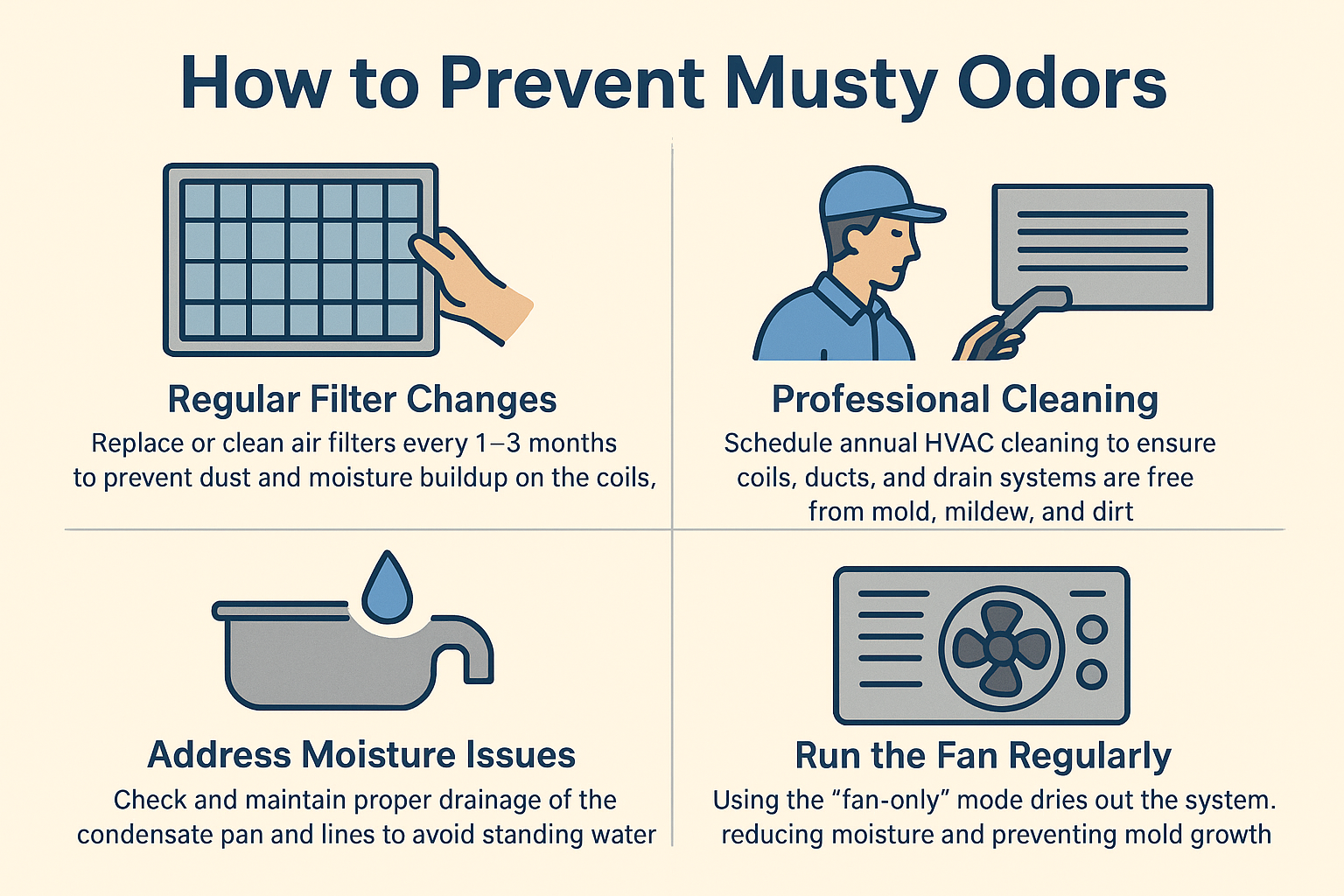
- Regular Filter Changes – Replace or clean air filters every 1–3 months to prevent dust and moisture buildup on the coils.
- Professional Cleaning – Schedule annual HVAC cleaning to ensure coils, ducts, and drain systems are free from mold, mildew, and dirt.
- Address Moisture Issues – Check and maintain proper drainage of the condensate pan and lines to avoid standing water.
- Run the Fan Regularly – Using the “fan-only” mode dries out the system, reducing moisture and preventing mold growth.
Signs Your AC Has a Musty Smell
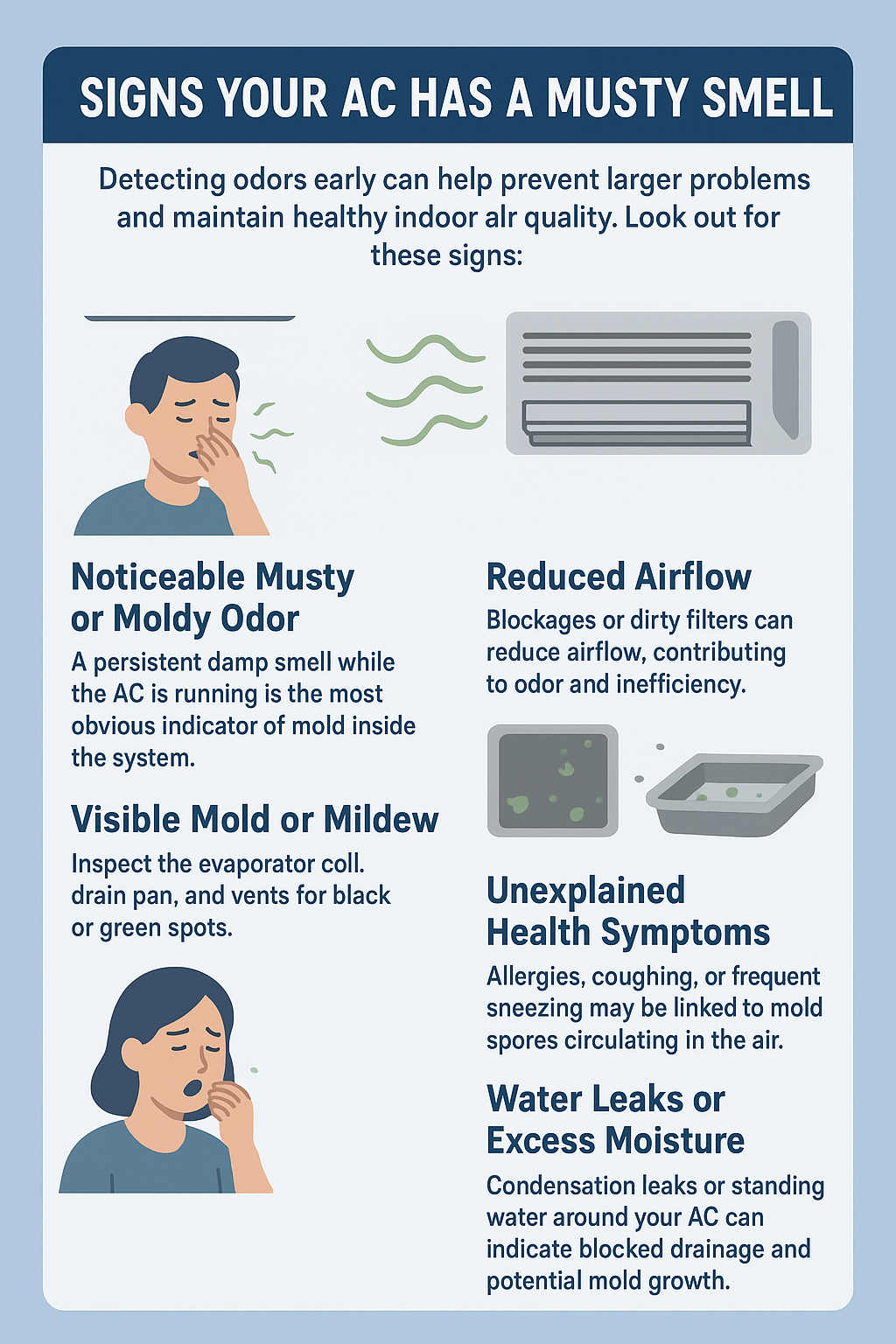
Detecting musty odors early helps prevent bigger problems, protect indoor air quality, and avoid costly repairs. Look out for these common signs:
Noticeable Musty or Moldy Odor
A persistent damp or moldy smell when the AC is running usually indicates moisture buildup and mold growth inside the system.
Reduced Airflow
Blocked drain lines, clogged filters, or mold buildup can weaken airflow, making your AC work harder and contribute to odors.
Visible Mold or Mildew
Check the evaporator coil, drain pan, and vents for black or green spots visible mold is a clear warning sign.
Unexplained Health Symptoms
Allergies, coughing, or sneezing indoors may indicate mold spores circulating from your AC system.
Water Leaks or Excess Moisture
Condensation leaks or standing water around the AC can signal blocked drainage and potential mold growth.
How to Properly Clean AC Filters
Maintaining clean filters is one of the easiest and most effective ways to prevent odors and improve AC performance:
- Turn Off the AC Unit – Ensure safety by switching off the system before removing filters.
- Remove the Filters – For split-type units, filters are usually behind the front panel.
- Vacuum the Filters – Remove dust and debris using a vacuum with a brush attachment.
- Wash with Mild Soap and Water – Rinse washable filters with lukewarm water and mild detergent. Avoid harsh chemicals.
- Dry Completely Before Reinstallation – Moisture trapped in filters encourages mold growth, so allow them to air dry fully.
- Replace or Reinstall – Non-washable filters should be replaced as recommended, usually every 1–3 months.
Using Anti-Microbial Sprays or Solutions Safely
Anti-microbial sprays help prevent mold and mildew, but proper use is crucial:
- Choose products specifically designed for HVAC systems.
- Turn off the AC before application and apply sparingly to coils, drain pans, and other areas.
- Follow the manufacturer’s instructions carefully, and wear gloves and a mask for protection.
- Use sprays as a supplement to regular maintenance, not a replacement.
Tips for Maintaining a Fresh-Smelling AC Year-Round
- Clean or Replace Filters Regularly: Prevent dust and moisture buildup every 1–3 months.
- Flush the Drain Line: Use a vinegar-and-water solution to avoid standing water and mold.
- Run the Fan After Cooling: Dry out the system by running “fan-only” mode for 30–60 seconds.
- Control Indoor Humidity: Keep moisture levels low with a dehumidifier.
- Use AC-Safe Anti-Microbial Sprays: Periodically apply sprays designed for HVAC systems.
- Schedule Annual Professional Maintenance: Have a technician clean coils, ducts, and drain pans to maintain fresh and efficient airflow.
FAQS
1. Why does my AC develop a musty smell?
Musty odors usually come from mold and mildew growing inside your AC system. Moisture, dirt, and dust accumulate in areas like filters, evaporator coils, drain pans, and ducts, creating an environment for mold to thrive.
2. How can I tell if my AC has mold or mildew?
Common signs include a persistent damp or moldy odor, reduced airflow, visible mold or mildew on coils or vents, unexplained allergy-like symptoms, and water leaks or excess moisture around the AC unit.
3. How often should I clean or replace my AC filters?
Filters should be cleaned or replaced every 1–3 months, depending on usage and indoor conditions. Homes with pets or high dust levels may require more frequent cleaning.
4. Can I prevent musty odors myself?
Yes, regular DIY maintenance can help. Key steps include cleaning or replacing filters, flushing the drain line with a vinegar-and-water solution, controlling indoor humidity with a dehumidifier, and running the AC fan after cooling to dry the system.
5. What are anti-microbial sprays, and can I use them safely?
Anti-microbial sprays help prevent mold and mildew buildup. Use only products designed for HVAC systems, turn off the AC before application, spray sparingly on coils and drain pans, and follow all safety instructions, including wearing gloves and a mask.
6. How often should I have professional maintenance done?
Annual professional maintenance is recommended. A technician can clean the evaporator coil, drain pan, and ducts, detect hidden issues like mold or leaks, and ensure your system runs efficiently.
7. What should I do if DIY maintenance doesn’t fix the odor?
Persistent odors may indicate deeper issues such as mold in the ducts or blocked drainage. Contact a professional technician from AyosLamig for a full inspection, cleaning, and repair.
8. How can I keep my AC smelling fresh all year?
Maintain regular filter cleaning, flush the drain line, control indoor humidity, run the fan to dry the system, use AC-safe anti-microbial sprays periodically, and schedule annual professional tune-ups to ensure clean airflow and prevent mold growth.
9. Does a musty AC smell affect my health?
Yes, mold spores and mildew can trigger allergies, respiratory irritation, coughing, sneezing, and other health issues, especially for individuals with asthma or weakened immune systems.
10. Can blocked drain lines cause odors even if filters are clean?
Absolutely. Water trapped in clogged condensate lines or overflowed drain pans can lead to mold growth, producing musty odors regardless of filter cleanliness. Regular drain line maintenance is crucial.