
Guides and Tips
What is Dry Mode in Aircon? The Ultimate Guide to Humidity Control, Comfort, and Energy Savings
· Ayos Lamig
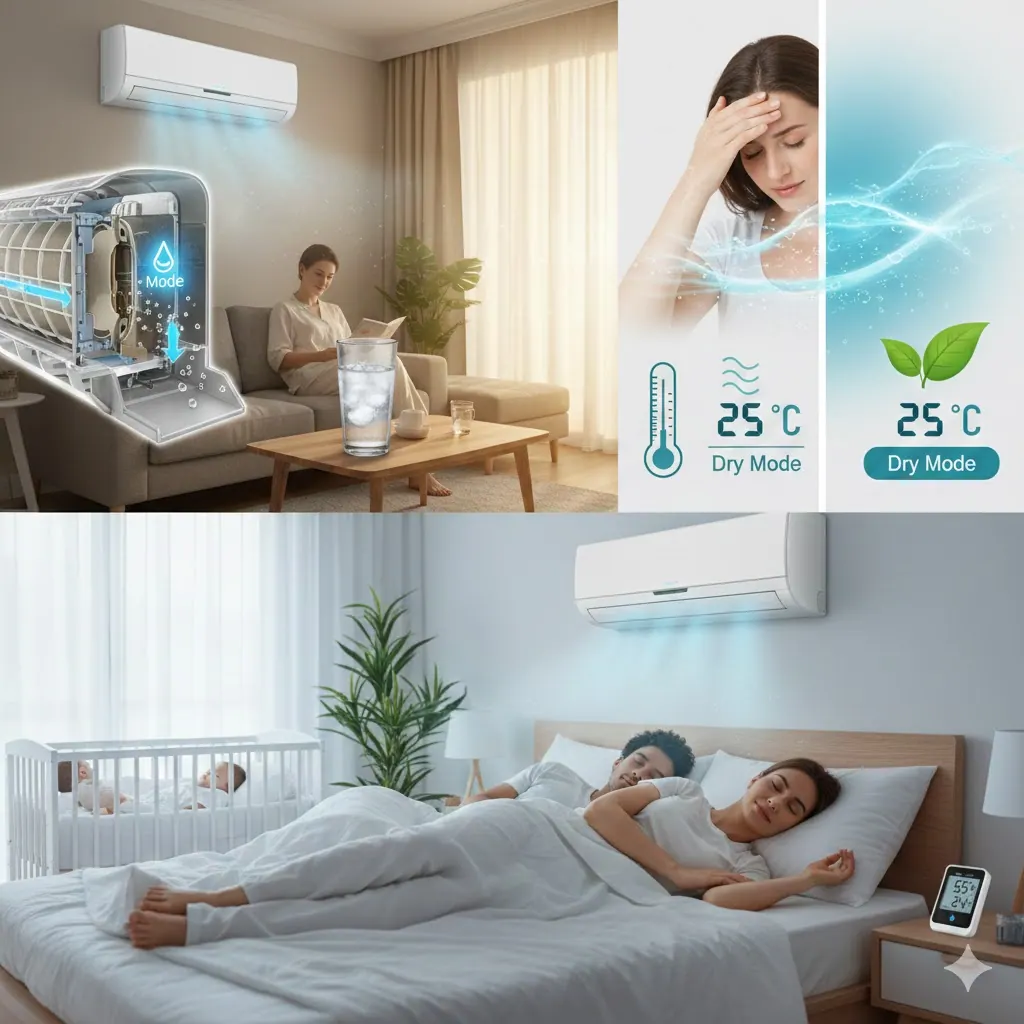
- 1 Above 60 per cent. Mould, mildew and fungi grow, and that is where the musty smell comes from. This is the band dry mode exists to bring a room out of.
- 2 50 to 60 per cent. Where dry mode settles a room, and where it stops. It holds a comfortable range rather than chasing a figure you set.
- 3 40 per cent. A specific low figure, which is a dehumidifier's job and not this. If a room needs to be taken that dry, dry mode is the wrong tool for it.
Understanding the various settings on your air conditioner (aircon) is key to maximizing both comfort and energy efficiency. While most users rely only on the standard Cool mode, the often-overlooked "Dry mode" is a powerful, specialized tool for dealing with the biggest source of discomfort in humid climates: excessive moisture. By learning to use this setting correctly, you can dramatically improve your indoor environment while keeping energy consumption low.
What is Dry Mode?
Dry mode, sometimes called dehumidification mode, is a setting on some air conditioners that removes excess moisture from the air while providing minimal cooling. Its essential function is to reduce the humidity level in a room or indoor space.
Unlike Cool mode, which aggressively focuses its resources on lowering the temperature, Dry mode is specifically designed to lower indoor humidity levels. This crucial difference means it reduces humidity without aggressively lowering the temperature. When you select this setting, your aircon makes your aircon prioritize removing moisture from the air. This feature is indispensable in climates where the temperature may be moderate, but the humidity is high. Dry mode is used primarily to reduce the humidity level in a room or indoor space when the air feels sticky but not excessively hot.
High relative humidity prevents sweat from evaporating effectively from your skin, making the air feel thick and clammy. By removing the oppressive moisture, Dry mode eliminates that sticky feeling, making the existing ambient temperature feel instantly more comfortable and breathable.
The Science Behind Dry Mode and Comfort
The discomfort caused by high humidity extends beyond immediate feeling. When relative humidity rises above 60%, it creates an environment ripe for several issues:
- Biological Growth: High moisture encourages the rapid growth of mold, mildew, and fungi, leading to health issues and musty odors.
- Allergy Triggers: Dust mites thrive in humid environments. Lowering the humidity level through Dry mode helps keep these allergens in check.
- Property Damage: Excessive humidity can cause warping in wood furniture, peeling paint, and corrosion.
By operating in Dry mode, you actively work to maintain a healthier indoor environment. This action stabilizes the humidity level at an optimal, comfortable percentage, typically around 50% to 60%.
When and How to Use Dry Mode
Dry mode should be utilized whenever humidity is the dominant factor in your discomfort, and full-power cooling is unnecessary. Dry mode is used primarily to reduce the humidity level in a room or indoor space when the air feels sticky but not scorching hot.
Humid, Moderate Days: This is the perfect scenario for Dry mode. If the air feels heavy, damp, or clammy, conditions frequently seen after heavy rainfall or in coastal areas, Dry mode is the most efficient choice. It removes the oppressive moisture without forcing the compressor to run long, high-power cycles.
Energy Efficiency and Cost Savings: Dry mode is key to achieving Energy Efficiency and Cost Savings. Because it runs the compressor gently and keeps the fan speed slow, it consumes significantly less power than Cool mode. This makes it a highly efficient setting to reduce humidity without aggressively lowering the temperature, translating directly into noticeable energy savings. Understanding the fundamental technology, whether you are using an inverter or non-inverter AC, can further inform your usage. Ultimately, mastering Dry mode is a key step toward embracing smarter homes and energy efficiency by intelligently managing appliance power demands.
During Sleep: High humidity significantly lowers the quality of sleep. Running the air conditioner in Dry mode overnight gently lowers the humidity to a comfortable level without causing the room temperature to drop too low, which is a common problem with running Cool mode all night.
- The compressor operates continuously, but only at the speed necessary to match the room's thermal load.
- This controlled ramp-up avoids the costly inrush current, making the operation analog and highly efficient.
- The cooling is proactive, maintaining the desired temperature consistently.
The Technical Differences Between Dry and Cool Mode
The air conditioner operates fundamentally differently in each setting. When you use Cool mode, the objective is achieving a specific low temperature (e.g., 24 degree celsius). The compressor runs hard and long, and the fan runs fast. The moisture removal is a secondary effect.Conversely, when you use Dry mode, the objective is removing water vapor. The compressor runs gently, and the fan runs slowly. This slow fan speed ensures the air has maximum dwell time over the cold coil, maximizing condensation. The temperature drop is minimal and secondary. This targeted approach is why it is often the better choice for reducing that sticky feeling without chilling the occupants.
Aircon Maintenance and Dry Mode Performance
The efficiency of Dry mode is highly dependent on the overall health of your air conditioning unit, particularly the drainage system. Since Dry mode extracts a significant amount of water from the air, proper drainage is non-negotiable.
Regular Filter Cleaning Dirty air filters restrict airflow, crippling Dry mode's efficiency. Cleaning your filters regularly is non-negotiable for all modes.
Ensuring Proper Drainage If the internal drain pan or line becomes clogged, the condensed water cannot escape, leading to reduced performance and leaks. If you see water actively leaking from your unit, it is crucial to address the issue, as improper drainage is a common cause, and you can find a list of common aircon water leak fixes to help troubleshoot the problem.
Common Misconceptions About Dry Mode
To use Dry mode effectively, it is important to discard common myths. Dry mode is not simply a slower version of Cool mode; it is designed for moisture removal, not rapid temperature drop. If your room is extremely hot, Cool mode is required. Furthermore, while Dry mode dehumidifies, it is not a perfect substitute for a dedicated dehumidifier in overly saturated environments, as it is only designed to bring humidity down to a comfortable range (around 60% RH).
- Tropical Comfort: Inverter ACs maintain temperature stability with precision, limiting variance to a negligible 0.5 plus or minus zero point five degrees Celsius
- . Crucially, the inverter's ability to run longer at low speeds allows the cooling coils to dehumidify the air more effectively, which is vital for removing the persistent humidity and making the room feel genuinely cooler in the Philippine climate.
The Bottom Line
The ultimate takeaway is that Dry mode is a highly specialized, energy-conscious tool. It is not a replacement for Cool mode on scorching hot days, but rather a superior solution for tackling the discomfort and negative effects of high indoor humidity.
Next time the air feels heavy, clammy, or oppressively sticky, remember that your air conditioner has a sophisticated solution designed just for that. Switch to Dry mode and feel the difference that optimized humidity control can make.
Book Your Preventive Maintenance Check-Up Today
Don't waste electricity cooling air that's just humid. Dry mode prioritizes moisture removal for maximum comfort and energy savings.
If your AC struggles with high humidity or you need to verify its efficiency, contact a certified HVAC expert.
Ensure your inverter or non-inverter unit is running optimally to cut costs and prevent future issues.
FAQs
What is the difference between Dry Mode and Cool Mode?
- Dry Mode’s primary goal is to remove excess moisture from the air (dehumidification) with minimal cooling. Cool Mode’s primary goal is to aggressively lower the temperature (heat removal), with moisture removal being a secondary effect. Dry Mode is better for humid but moderately warm days, while Cool Mode is for high heat.
Is Dry Mode better for energy saving than Cool Mode?
- Yes, generally. Dry Mode runs the compressor and fan at lower speeds and less frequently, focusing on moisture extraction rather than intense cooling. This process requires significantly less electricity than the continuous high-power operation used in Cool Mode to reach a set temperature.
Can I use Dry Mode instead of a dedicated dehumidifier?
- Dry Mode is excellent for maintaining a comfortable humidity level (typically around 60% RH) in a living space. However, it is not a perfect substitute for a dedicated dehumidifier, which can pull humidity down to very specific, low percentages (like 40% RH) and is better suited for extremely wet areas like basements.
Why is my AC leaking water when I use Dry Mode?
- Water leakage when using Dry Mode often indicates a maintenance issue. Since Dry Mode pulls a lot of moisture from the air, a clog in the drain line or drain pan is the most common cause. The extracted water is backing up instead of draining out, requiring professional cleaning to resolve.
Does dry mode actually save electricity?
Yes while it is running, and that is a narrower claim than it sounds. In dry mode an air conditioner runs its fan slowly and lets the compressor work in shorter bursts, so the unit draws less than it does in cool mode. The saving is real and it lasts exactly as long as you leave it there.
- In a room that is already cool and merely damp, dry mode holds it comfortable for less. This is the case the saving is genuinely for.
- In a room that is hot, it will not bring the temperature down, so most people last twenty minutes and switch back to cool. Nothing was saved; the room simply stayed hot for twenty minutes.
- Left on all night in a humid room, it can leave the air drier than is pleasant, and a dry throat in the morning is the usual complaint.
So the honest version is that dry mode is cheaper per hour and is not a cheaper way to reach a cold room. If you want the figure for your own household rather than a rule of thumb, the estimator prices running time at your own rate, and dry mode is fewer compressor hours rather than a different kind of hour.
Price it at your own rateDry mode against cool mode, plainly
Both modes use the same hardware and the difference is what the AC is aiming at. Cool mode chases a temperature. Dry mode chases moisture, and the temperature is whatever falls out of doing that.
- Fan speed: cool mode runs the fan to suit the setting, dry mode keeps it low on purpose, because slow air across a cold coil condenses more water out of it.
- Compressor behaviour: in cool mode it works until the room reaches your number. In dry mode it runs in shorter cycles aimed at pulling water out rather than at holding a temperature.
- What you feel: cool mode makes a room colder. Dry mode makes the same room feel lighter at close to the same temperature.
- What it costs: less per hour in dry mode, because less of that hour is spent with the compressor working hard.
This is also why an air conditioner that is too big for its room struggles with humidity. It reaches the set temperature fast, stops, and never runs long enough for the coil to take the water out, which leaves a room that is cold and clammy at once.
When to use it, and when to leave it alone
A short list, because the button is misused mostly in one direction.
- Rainy season, room already cool, air feels heavy. This is what it is for.
- An air-conditioned room that smells musty within an hour of switching on. Dry mode helps, and a coil that needs cleaning is the actual cause.
- Coming in from outside on a hot afternoon. Use cool mode with the fan on high instead, and switch to dry later if the room feels damp once it is cold.
- Overnight in an already dry room. There is nothing left to remove, so you are paying for a fan.
Questions people ask first
- Which has lower power consumption, dry mode or cool mode?
- Per hour, yes. The fan runs slower and the compressor spends less of the hour working hard, so an air conditioner in dry mode draws less than the same unit in cool mode. What it does not do is cool a hot room, so the comparison only holds when the room is already at a temperature you are happy with.
- Can I use dry mode instead of cool mode to save money?
- Only in a room that is already cool. Used on a hot room it saves nothing in practice, because it will not bring the temperature down and you will switch back. The saving people are looking for is usually in the temperature they set in cool mode rather than in the mode itself.
- What is the difference between dry mode and cool mode on an air conditioner?
- Cool mode aims at a temperature. Dry mode aims at moisture, running the fan slowly so that more water condenses on the coil, and the temperature ends up wherever that leaves it. Same hardware, different target.
- Should I leave the AC on dry mode all night?
- Usually not. Once the moisture is out there is nothing more for it to remove, and you spend the rest of the night running a fan and waking up with a dry throat. Cool mode with sleep enabled suits a whole night better.
- Why does my room still feel damp when the aircon is cold?
- Because cold and dry are different things, and an oversized unit produces the first without the second. It hits the set temperature quickly, switches off, and never runs long enough for water to condense out. A correctly sized unit dehumidifies as a side effect of simply running properly.