
AyosLamig | Your Local Aircon Technicians in Bataan & Pampanga

Comparison of Inverter and Non-Inverter ACs

The decision between an inverter and a non-inverter air conditioner is a choice between two distinct technological philosophies: brute-force efficiency and precise, adaptive intelligence. In a tropical nation like the Philippines, where electricity rates are notoriously high and cooling demand is constant, this choice has profound financial and comfort implications. Research conducted by Ayoslamig indicates that the key differentiators lie in the compressor’s mechanism, which creates dramatic variances in energy consumption, comfort, lifespan, and overall operating cost.

The Core Mechanical Difference: Binary vs. Analog Power

The fundamental distinction is rooted in how each unit manages the electrical current supplied to its compressor motor.

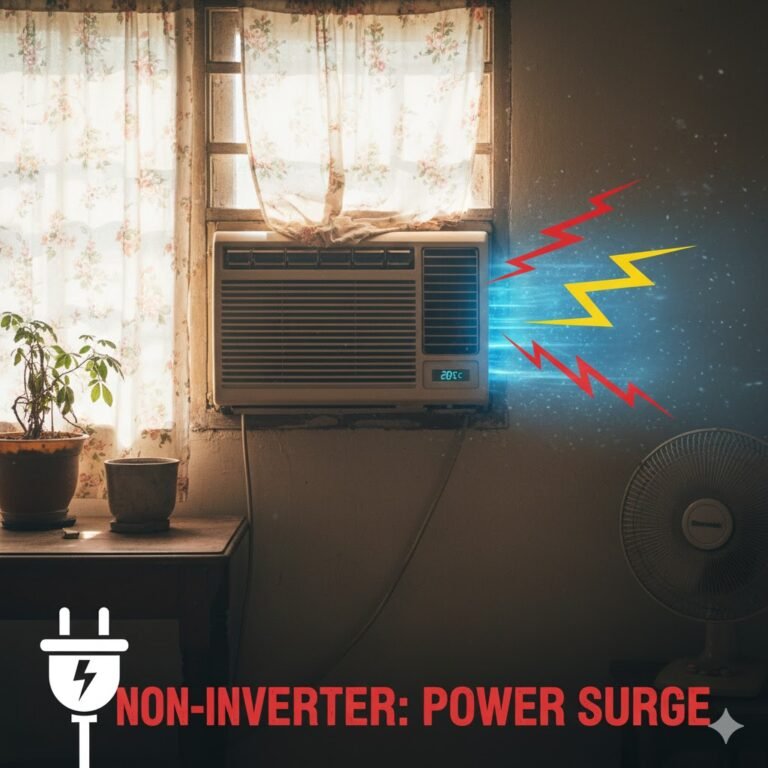
Non-Inverter: The Fixed-Speed Sprinter (Reactive Cooling)

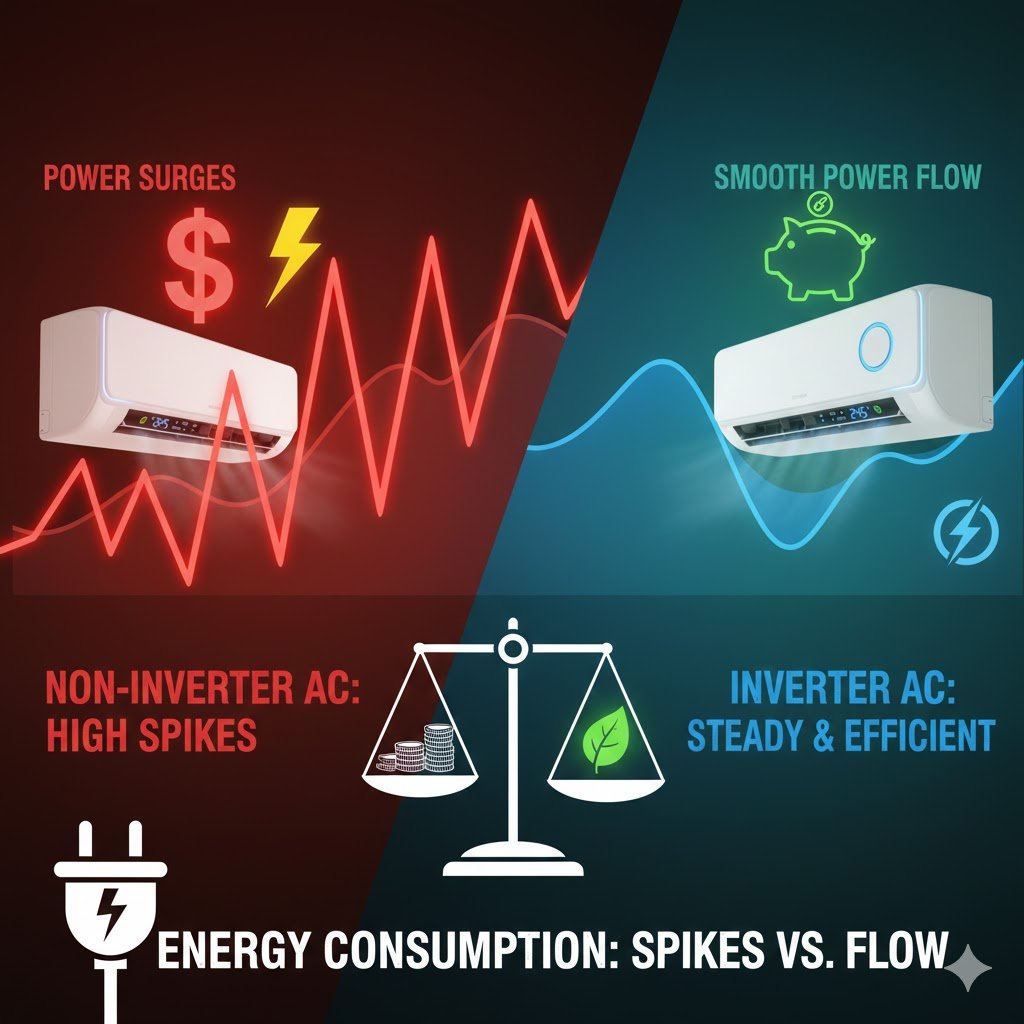
The non-inverter AC uses a traditional AC Induction Motor paired with a fixed-speed compressor. Its operating logic is simple and binary: the compressor runs at 100% full capacity until the set temperature is reached, and then shuts off completely. When the temperature drifts higher, the unit starts up again, leading to an inrush current—a destructive surge of electricity that is a primary cause of high energy bills and mechanical wear. This cooling is fundamentally reactive, addressing a temperature problem only after it has occurred.

When installing either of these complex systems, especially the sophisticated electronic components of an inverter unit, expert installation and maintenance are non-negotiable for safety and efficiency. To ensure your new unit performs optimally from day one, having certified technicians handle the setup is vital. Seeking expert installation and reliable service is crucial for the longevity and efficiency of your unit.

Non inverter Aircon Unit

Inverter: The Variable-Speed Marathon Runner (Proactive Cooling)

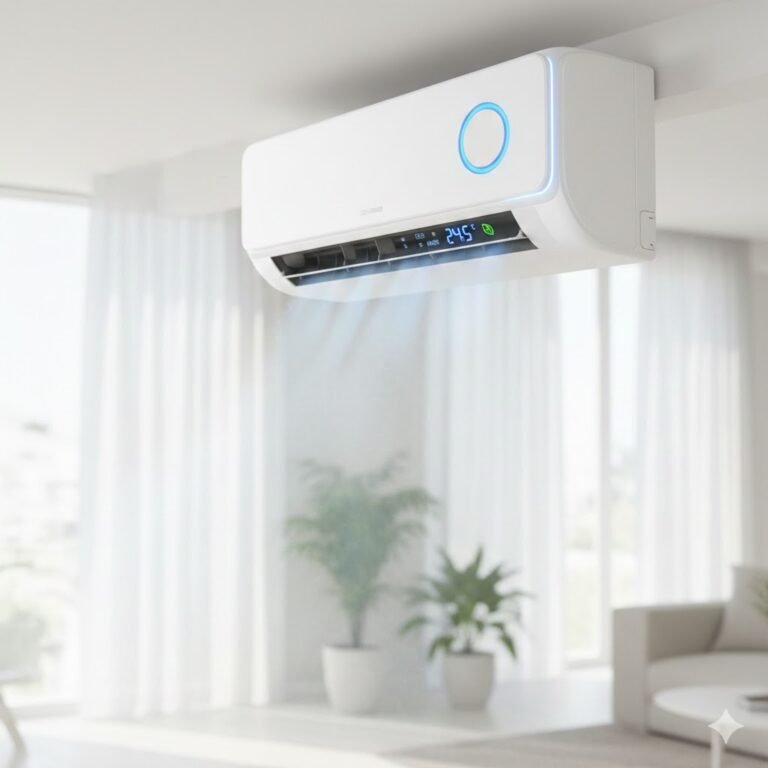
The inverter AC utilizes an advanced electronic circuit—the Variable Frequency Drive (VFD)—often utilizing components like Insulated-Gate Bipolar Transistors (IGBTs). This VFD converts incoming power to a variable frequency, allowing the compressor’s speed to be modulated from as low as 10% to 100% capacity.

  • The compressor operates continuously, but only at the speed necessary to match the room’s thermal load.

  • This controlled ramp-up avoids the costly inrush current, making the operation analog and highly efficient.

  • The cooling is proactive, maintaining the desired temperature consistently.

Image of an Inverter Aircon unit

Performance Metrics and Comfort Profile in the Tropics

The different motor controls translate directly into measurable differences in operational quality and user comfort, especially relevant in the country’s hot and humid environment.

Energy Efficiency and Consumption (The Cost of Spikes)

The inverter’s smooth operation results in extraordinary efficiency gains. In the Philippines, efficiency is measured by the CSPF (Cooling Seasonal Performance Factor), the mandatory energy standard. A higher CSPF indicates a unit is optimized for varying conditions, which is exactly what inverter technology provides. Specific analysis shows a non-inverter unit can consume approximately 6,230 kWh per year, while a comparable inverter unit consumes only about 3,471kWh per year. This massive difference directly mitigates the high cost of local electricity. For a detailed difference between inverter and non-inverter AC, the compressor’s mechanism is key.

Thermal Stability and Dehumidification

The non-inverter’s constant cycling creates uncomfortable temperature fluctuations of 2 plus or minus zero point five degrees Celsius which directly impacts comfort, demonstrating the distinction between fixed-speed vs. inverter air conditioners.

  • Tropical Comfort: Inverter ACs maintain temperature stability with precision, limiting variance to a negligible 0.5 plus or minus zero point five degrees Celsius

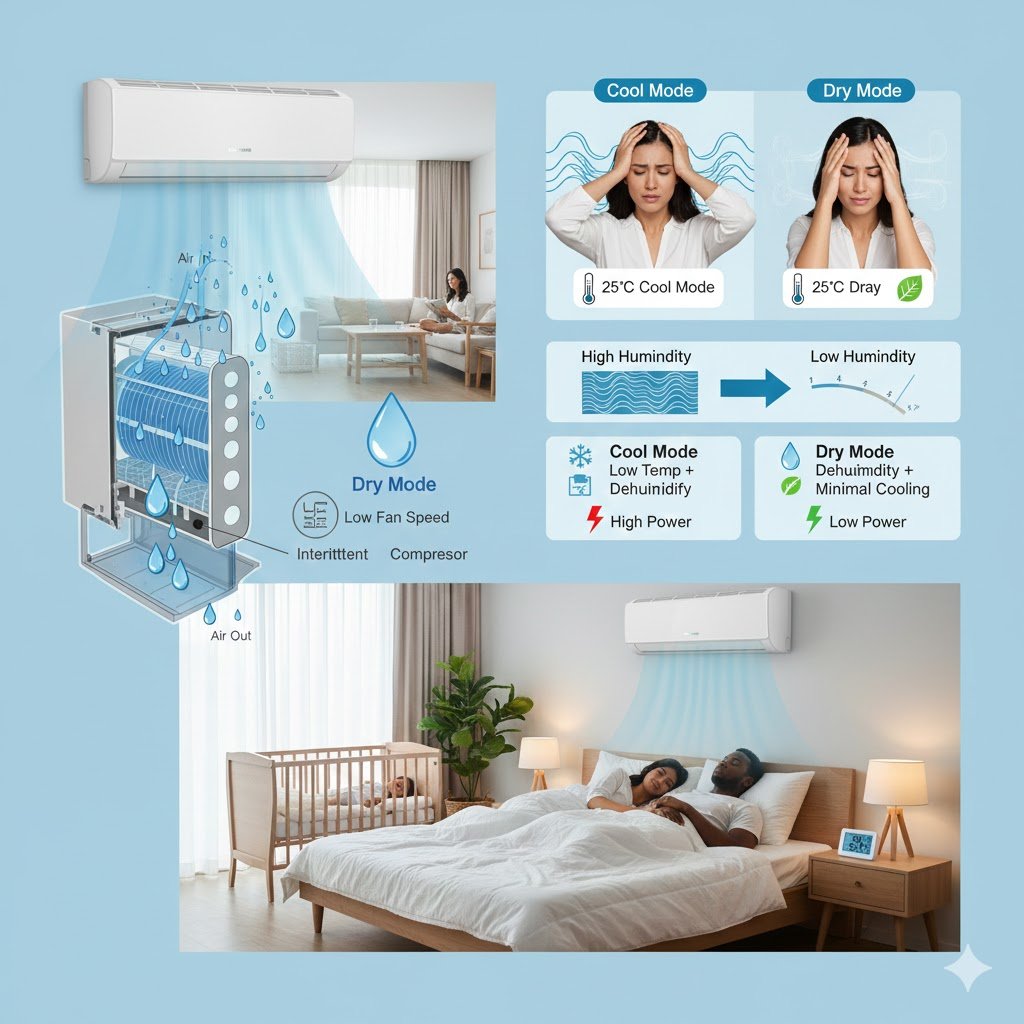
  • . Crucially, the inverter’s ability to run longer at low speeds allows the cooling coils to dehumidify the air more effectively, which is vital for removing the persistent humidity and making the room feel genuinely cooler in the Philippine climate.

Acoustic Profile and Operational Noise

The sound level is a crucial comfort metric:

  • The fixed-speed unit’s forceful cycling generates noise levels between 48-55 dB (noticeable and distracting).

  • The inverter unit’s smooth, continuous operation reduces noise to the 38-45 dB range, comparable to the quiet hum of a library or a modern refrigerator, essential for a good night’s sleep.

Acoustic Profile and Operational Noise

The sound level is a crucial comfort metric:

  • The fixed-speed unit’s forceful cycling generates noise levels between 48-55 dB (noticeable and distracting).

  • The inverter unit’s smooth, continuous operation reduces noise to the 38-45 dB range, comparable to the quiet hum of a library or a modern refrigerator, essential for a good night’s sleep.

Total Ownership and Technical Resilience

The cost comparison must extend far beyond the initial purchase price to cover the unit’s entire service life.

Financial Trade-off and Payback Period

  • Initial Cost: Non-inverter units are typically 25% to 40% cheaper upfront.

  • Return on Investment (ROI): Due to massive energy savings in a high-tariff environment, the higher initial cost of an inverter AC is often recouped in as little as 3.42 to 5 years of heavy use, making it the far more economical choice in the long term.

Durability, Lifespan, and Maintenance Complexity

  • Lifespan: The low-stress operation of the inverter extends its lifespan to 12-15 years, compared to 8-10 years for non-inverter units whose components are stressed by the continuous cycling.
  • Maintenance Nuance: While the inverter’s advanced PCB is more costly to replace if damaged, its improved efficiency often justifies the risk.

Voltage Tolerance and System Resilience

  • Philippine Grid Stability: Voltage fluctuations are common outside of central metropolitan areas. Non-inverter units typically require a narrow voltage range. Inverter ACs, thanks to their electronics, can often operate effectively across a wider range (e.g., 160 volts to 280 volts offering superior protection against minor voltage fluctuations and reducing the risk of system failure without external stabilizers.

Environmental Footprint: The Sustainable Choice

The inverter is the clear winner in minimizing climate impact due to its numerous benefits for energy saving and sustainability.

Indirect Emissions and the TEWI Analysis

  • The Total Equivalent Warming Impact (TEWI)—a measure of a unit’s lifetime climate impact—reveals that the inverter AC’s reduced energy consumption leads to a massive reduction in indirect CO2 emissions.

    • CO2 Reduction: TEWI analysis confirms that switching to an inverter unit can reduce lifetime CO2 emissions by up to 49%.

    • Refrigerant Choice: Modern inverter models primarily use the environmentally friendlier R32 refrigerant, which has a lower Global Warming Potential (GWP) compared to older refrigerants often found in fixed-speed units.

    The choice between inverter and non-inverter is a pivotal decision between high-impact, reactive cooling, and a low-impact, sustainable energy management system, making the inverter the definitive standard for modern Philippine cooling.

References

Book Your Preventive Maintenance Check-Up Today

In a climate like the Philippines, where high humidity causes common water leakage and continuous use leads to steep electric bills, preventive care is essential.

If you suspect a complex issue like low refrigerant or simply want peace of mind regarding your unit's efficiency and longevity, contact a certified HVAC expert now.

Schedule your service call to protect your inverter or non-inverter unit from catastrophic failure, stop water damage, and ensure you are maximizing your unit's CSPF (Cooling Seasonal Performance Factor) savings.
FAQs

CSPF stands for Cooling Seasonal Performance Factor. It is the current mandatory energy efficiency standard in the Philippines (replacing the older EER). CSPF is critical because it calculates efficiency based on the varying cooling load over an entire season, providing a much more accurate prediction of real-world energy consumption in the country’s dynamic tropical climate compared to fixed-point ratings.

While initial costs are higher, the long-term savings are significant. Research shows that inverter units can reduce annual energy consumption by 35% to 44% compared to non-inverters. In a high-tariff environment like the Philippines, these consistent energy savings often lead to the unit’s higher purchase price being recouped in as little as 3.42to 5 years of heavy use.

Inverter AC units offer superior resilience. Their Variable Frequency Drive (VFD) electronics allow them to operate safely across a wider voltage range (often 160 V to 280 V This wider tolerance helps protect the unit from minor voltage dips and spikes common in provincial grids or older infrastructures, reducing the risk of system failure without requiring an external stabilizer.

Yes, significantly. The inverter’s ability to run continuously at low speeds ensures superior dehumidification without over-cooling the room, which is vital for tropical comfort. It maintains greater thermal stability (temperature variance of only 0.5 plus or minus zero point five degrees Celsius compared to the non-inverter’s constant cycling, resulting in a consistently drier and more comfortable environment.

Recent Post

Aircon Maintenance 101: How to Clean an Aircon Filter the Right Way

Discover the simple, monthly DIY maintenance guide to cleaning your air conditioner filter. A clean filter is vital for maximum cooling efficiency, …

What is Dry Mode in Aircon? The Ultimate Guide to Humidity Control, Comfort, and Energy Savings

How to use your AC's Dry Mode to cut humidity, prevent common water issues, and boost your unit’s energy efficiency without freezing …

Comparison of Inverter and Non-Inverter Aircon Unit

The choice between an Inverter and Non-Inverter AC in the Philippines has profound financial and comfort implications due to notoriously high electricity …

Close-up of a wall-mounted air conditioner unit actively dripping water onto a dark wooden floor, with a small puddle and white towels nearby.

Don't panic when your AC unit drips! A water leak often points to a manageable issue. Discover the four main causes of …

Aircon Leaks? We got you!

Worry no more! Let us inspect and solve the problem professionally.

Call/Text:  0920-960-0596/0948-893-7069
Message us on Facebook
Available 7 days a week, with flexible appointment times

Trusted by hundreds of homeowners in Bataan and Pampanga
Licensed, honest, and always courteous service