
AyosLamig | Your Local Aircon Technicians in Bataan & Pampanga

What is Dry Mode in Aircon? The Ultimate Guide to Humidity Control, Comfort, and Energy Savings

Understanding the various settings on your air conditioner (aircon) is key to maximizing both comfort and energy efficiency. While most users rely only on the standard Cool mode, the often-overlooked “Dry mode” is a powerful, specialized tool for dealing with the biggest source of discomfort in humid climates: excessive moisture. By learning to use this setting correctly, you can dramatically improve your indoor environment while keeping energy consumption low.

What is Dry Mode?

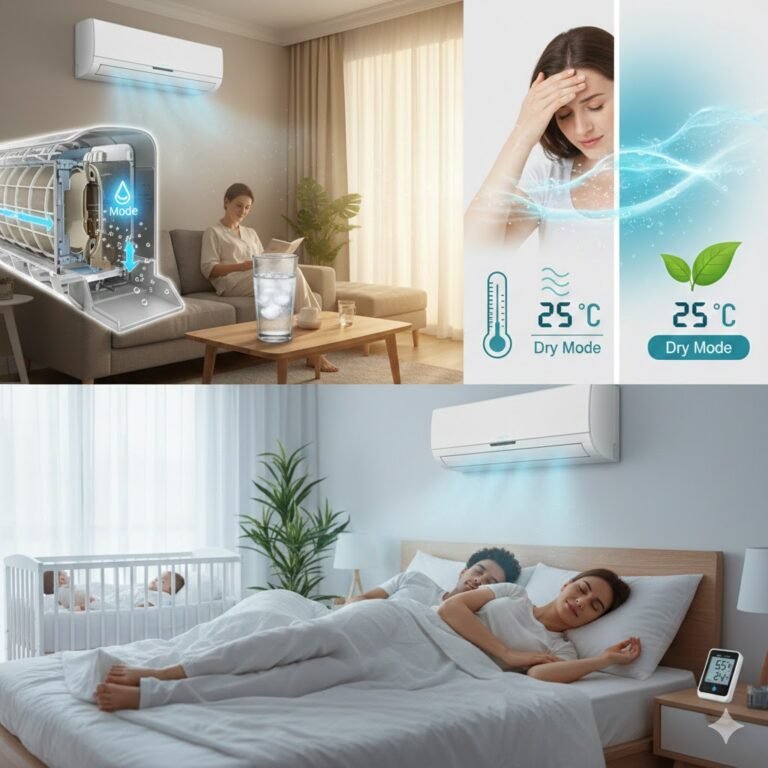
Dry mode, sometimes called dehumidification mode, is a setting on some air conditioners that removes excess moisture from the air while providing minimal cooling. Its essential function is to reduce the humidity level in a room or indoor space.

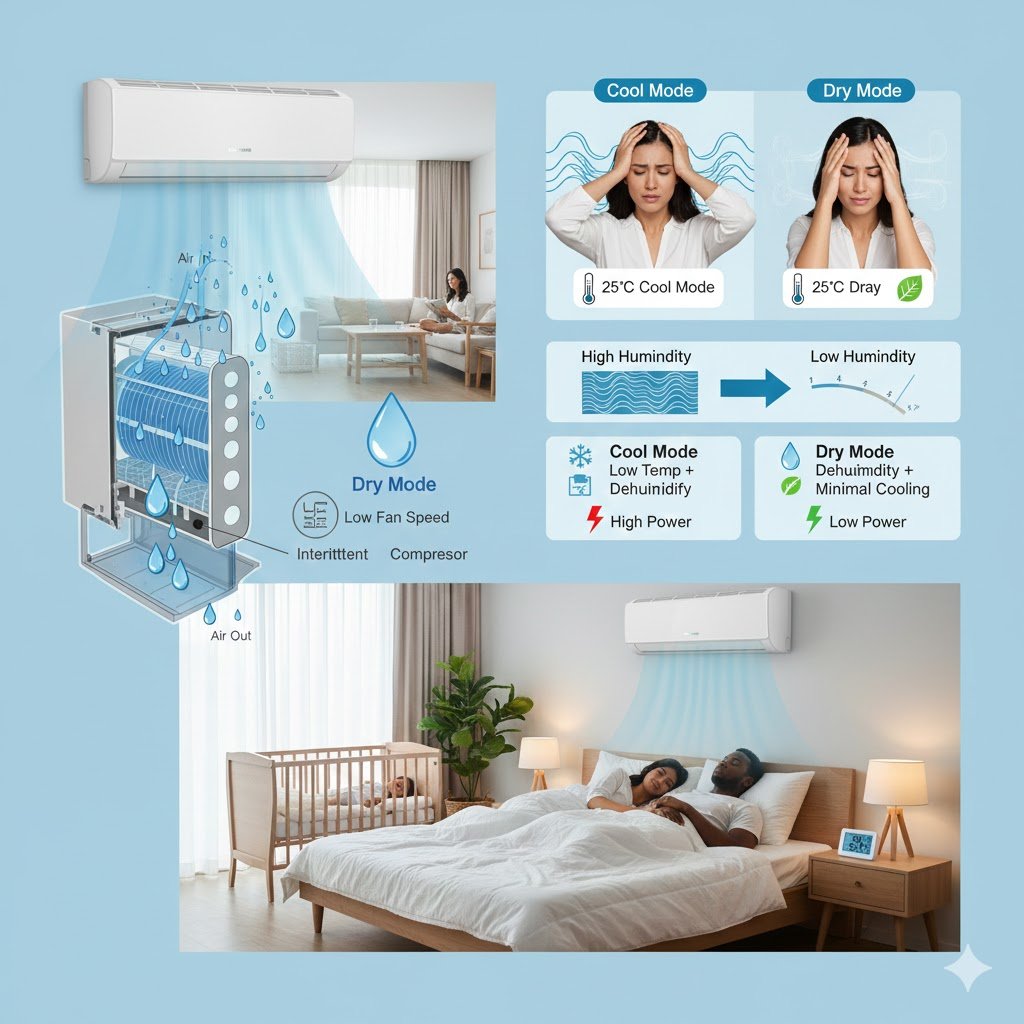
Unlike Cool mode, which aggressively focuses its resources on lowering the temperature, Dry mode is specifically designed to lower indoor humidity levels. This crucial difference means it reduces humidity without aggressively lowering the temperature. When you select this setting, your aircon makes your aircon prioritize removing moisture from the air. This feature is indispensable in climates where the temperature may be moderate, but the humidity is high. Dry mode is used primarily to reduce the humidity level in a room or indoor space when the air feels sticky but not excessively hot.

High relative humidity prevents sweat from evaporating effectively from your skin, making the air feel thick and clammy. By removing the oppressive moisture, Dry mode eliminates that sticky feeling, making the existing ambient temperature feel instantly more comfortable and breathable.

The Science Behind Dry Mode and Comfort

The discomfort caused by high humidity extends beyond immediate feeling. When relative humidity rises above 60%, it creates an environment ripe for several issues:

  • Biological Growth: High moisture encourages the rapid growth of mold, mildew, and fungi, leading to health issues and musty odors.

  • Allergy Triggers: Dust mites thrive in humid environments. Lowering the humidity level through Dry mode helps keep these allergens in check.

  • Property Damage: Excessive humidity can cause warping in wood furniture, peeling paint, and corrosion.

By operating in Dry mode, you actively work to maintain a healthier indoor environment. This action stabilizes the humidity level at an optimal, comfortable percentage, typically around 50% to 60%.

What is Dry Mode on AC? Explanation of its Purpose and Benefits


When and How to Use Dry Mode

Dry mode should be utilized whenever humidity is the dominant factor in your discomfort, and full-power cooling is unnecessary. Dry mode is used primarily to reduce the humidity level in a room or indoor space when the air feels sticky but not scorching hot.

Humid, Moderate Days: This is the perfect scenario for Dry mode. If the air feels heavy, damp, or clammy—conditions frequently seen after heavy rainfall or in coastal areas—Dry mode is the most efficient choice. It removes the oppressive moisture without forcing the compressor to run long, high-power cycles.

Energy Efficiency and Cost Savings: Dry mode is key to achieving Energy Efficiency and Cost Savings. Because it runs the compressor gently and keeps the fan speed slow, it consumes significantly less power than Cool mode. This makes it a highly efficient setting to reduce humidity without aggressively lowering the temperature, translating directly into noticeable energy savings. Understanding the fundamental technology—whether you are using an inverter or non-inverter AC—can further inform your usage. Ultimately, mastering Dry mode is a key step toward embracing smarter homes and energy efficiency by intelligently managing appliance power demands.

During Sleep: High humidity significantly lowers the quality of sleep. Running the air conditioner in Dry mode overnight gently lowers the humidity to a comfortable level without causing the room temperature to drop too low, which is a common problem with running Cool mode all night.

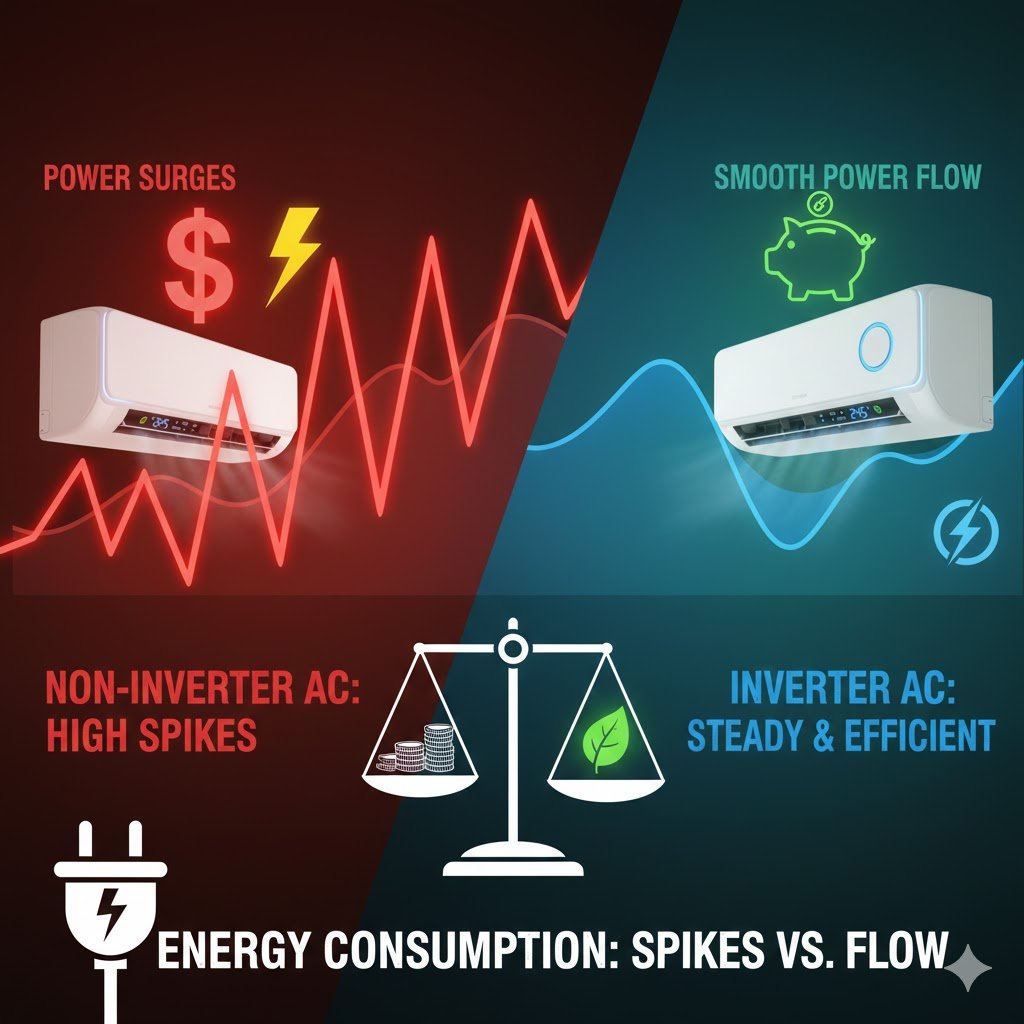
  • The compressor operates continuously, but only at the speed necessary to match the room’s thermal load.

  • This controlled ramp-up avoids the costly inrush current, making the operation analog and highly efficient.

  • The cooling is proactive, maintaining the desired temperature consistently.

The Technical Differences Between Dry and Cool Mode

The air conditioner operates fundamentally differently in each setting. When you use Cool mode, the objective is achieving a specific low temperature (e.g., 24 degree celsius). The compressor runs hard and long, and the fan runs fast. The moisture removal is a secondary effect.Conversely, when you use Dry mode, the objective is removing water vapor. The compressor runs gently, and the fan runs slowly. This slow fan speed ensures the air has maximum dwell time over the cold coil, maximizing condensation. The temperature drop is minimal and secondary. This targeted approach is why it is often the better choice for reducing that sticky feeling without chilling the occupants.

Aircon Maintenance and Dry Mode Performance

The efficiency of Dry mode is highly dependent on the overall health of your air conditioning unit, particularly the drainage system. Since Dry mode extracts a significant amount of water from the air, proper drainage is non-negotiable.

Regular Filter Cleaning Dirty air filters restrict airflow, crippling Dry mode’s efficiency. Cleaning your filters regularly is non-negotiable for all modes.

Ensuring Proper Drainage If the internal drain pan or line becomes clogged, the condensed water cannot escape, leading to reduced performance and leaks. If you see water actively leaking from your unit, it is crucial to address the issue, as improper drainage is a common cause, and you can find a list of common aircon water leak fixes to help troubleshoot the problem.

Common Misconceptions About Dry Mode

To use Dry mode effectively, it is important to discard common myths. Dry mode is not simply a slower version of Cool mode; it is designed for moisture removal, not rapid temperature drop. If your room is extremely hot, Cool mode is required. Furthermore, while Dry mode dehumidifies, it is not a perfect substitute for a dedicated dehumidifier in overly saturated environments, as it is only designed to bring humidity down to a comfortable range (around 60% RH).

  • Tropical Comfort: Inverter ACs maintain temperature stability with precision, limiting variance to a negligible 0.5 plus or minus zero point five degrees Celsius

  • . Crucially, the inverter’s ability to run longer at low speeds allows the cooling coils to dehumidify the air more effectively, which is vital for removing the persistent humidity and making the room feel genuinely cooler in the Philippine climate.

The Bottom Line

The ultimate takeaway is that Dry mode is a highly specialized, energy-conscious tool. It is not a replacement for Cool mode on scorching hot days, but rather a superior solution for tackling the discomfort and negative effects of high indoor humidity.

Next time the air feels heavy, clammy, or oppressively sticky, remember that your air conditioner has a sophisticated solution designed just for that. Switch to Dry mode and feel the difference that optimized humidity control can make.

Book Your Preventive Maintenance Check-Up Today

Don't waste electricity cooling air that's just humid. Dry mode prioritizes moisture removal for maximum comfort and energy savings.

If your AC struggles with high humidity or you need to verify its efficiency, contact a certified HVAC expert.

Ensure your inverter or non-inverter unit is running optimally to cut costs and prevent future issues.
FAQs

What is the difference between Dry Mode and Cool Mode?
  • Dry Mode’s primary goal is to remove excess moisture from the air (dehumidification) with minimal cooling. Cool Mode’s primary goal is to aggressively lower the temperature (heat removal), with moisture removal being a secondary effect. Dry Mode is better for humid but moderately warm days, while Cool Mode is for high heat.
  • Yes, generally. Dry Mode runs the compressor and fan at lower speeds and less frequently, focusing on moisture extraction rather than intense cooling. This process requires significantly less electricity than the continuous high-power operation used in Cool Mode to reach a set temperature.

  • Dry Mode is excellent for maintaining a comfortable humidity level (typically around 60% RH) in a living space. However, it is not a perfect substitute for a dedicated dehumidifier, which can pull humidity down to very specific, low percentages (like 40% RH) and is better suited for extremely wet areas like basements.
  • Water leakage when using Dry Mode often indicates a maintenance issue. Since Dry Mode pulls a lot of moisture from the air, a clog in the drain line or drain pan is the most common cause. The extracted water is backing up instead of draining out, requiring professional cleaning to resolve.

Recent Post

Aircon Maintenance 101: How to Clean an Aircon Filter the Right Way

Discover the simple, monthly DIY maintenance guide to cleaning your air conditioner filter. A clean filter is vital for maximum cooling efficiency, lower bills, and preventing issues like water leaks. You should clean your filters once a month.

What is Dry Mode in Aircon? The Ultimate Guide to Humidity Control, Comfort, and Energy Savings

How to use your AC's Dry Mode to cut humidity, prevent common water issues, and boost your unit’s energy efficiency without freezing your room.

Comparison of Inverter and Non-Inverter Aircon Unit

The choice between an Inverter and Non-Inverter AC in the Philippines has profound financial and comfort implications due to notoriously high electricity rates and constant cooling demand. This ultimate guide breaks down the core mechanical differences, comparing the fixed-speed, binary operation of non-inverter units against the precise, variable-speed intelligence of inverters. Discover how this choice impacts energy savings (with inverters consuming up to 44% less energy), CSPF efficiency standards, voltage resilience against common grid fluctuations, and superior dehumidification vital for tropical comfort. Based on research conducted by Ayoslamig.

Close-up of a wall-mounted air conditioner unit actively dripping water onto a dark wooden floor, with a small puddle and white towels nearby.

Don't panic when your AC unit drips! A water leak often points to a manageable issue. Discover the four main causes of AC leaks and learn the crucial DIY steps—from clearing a clogged drain line to fixing frozen coils—that can save you thousands in water damage and system repairs.

Aircon Leaks? We got you!

Worry no more! Let us inspect and solve the problem professionally.

Call/Text:  0920-960-0596/0948-893-7069
Message us on Facebook
Available 7 days a week, with flexible appointment times

Trusted by hundreds of homeowners in Bataan and Pampanga
Licensed, honest, and always courteous service